Bapu's Satya
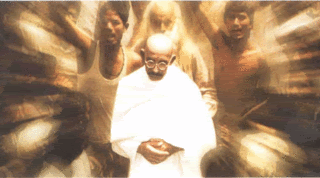
Mohandas Karamchand Gandhi (1869-1948) was born during the days of the industrial revolution and by the age of 79, he had witnessed two World Wars and the birth of a free India. And amidst those days of changing winds; his life; his ideas; his virtues; his politics influenced the world around him and found him the greatest esteem amongst the intellectual communities of the world. As such, to study a man, in as much a dynamic world as he, effectively; one must understand that he was more than just out of the ordinary. Rather he was a political genius and a man with the ‘heart of gold.’ Who grasped the evolution of his generation and cumulated both the old and new wisdoms to guide the masses of people towards a more just world.
The legacy of Gandhiji’s satyagraha model is based on him being both a genius politician and a man of faith and it can thus withstand any oppressor whilst building a Rámarajya.
The mosaic of indigenous factions rising against both the specific and the aggregate injustices of foreign rule, combined with the massive shifts from rural
India to Victorian socio-economics and the poorly administered periods of famine: set in sorts, a linear precedence for Indian Nationalism. Nationalism based on the mythical primordial
[ii] captured the Hindu imagination and thus created nostalgia of the more just days of Ráma and
Krishna.
[iii] Thus the paradox of a “half-naked fakir”
[iv] challenging the great
British Empire is dispelled; for Mahatma Gandhi became the “prophet” who, at the least embodied their visions through Ram Rajya. That is not to say that this ideology found equivalent appeal amongst all, especially with the Elite, Muslim and Creole populations. Yet by championing the support of the millions of Indian peasants, Gandhiji found that even the unamused coalesced in order to achieve their more immediate goals and for the greater cause of
Independence. The headway gained by such nationalistic coalitions, even in light of their intellectual differences meant that the Indian challenge was not merely against the Western hegemony; but also in maximizing
India’s unity. Gandhiji, as a politician understood both the roots of Indian Nationalism and this necessity for unification in his campaign for Swaraj and thus unified the various peoples, cultures, religions and other miscellaneous factions through his methods of Satyagraha: non-violence and truth.
Part I: Evaluating Bapuji through Hind Swarajya
The feeble image of Gandhiji donning the indigenous garb of times long past, can quickly mislead the contemporary reader to dismissing him as a silly quixotic figure with no real world experience. On the contrary, Bapu was both an experienced attorney and a sophisticated statesman; for he was a public advocate on three different continents: Europe, Africa and
Asia. Further as a British educated barrister, Gandhiji’s initial politics placed great emphasis on
Britain’s moral accountability and its judicial system. Although during this stage he did mobilize against unjust laws; he sought reforms: not
Independence. As noted in a Gandhi study guide: “
The Empire, he felt, embodied the principles of equality and liberty that he believed in, and he regarded the racist policies of the South African states as an aberration, rather than a defining trait, of British rule. Indeed, he saw the
Raj as benevolent rather than tyrannical; despite its flaws, he believed that the Empire had been good for
India, and that the ideals of the British constitution merited the loyalty of all British subjects across the globe, white, black and Indian alike.”
[v] Yet as he matured, Gandhiji slowly graduated from the conventional English methods of governance and shed the
Emperor’s New Clothes.
[vi] As he had discarded his foreign manufactured garbs, he also reallocated his political faith from the British Administration to home rule: Swaraj.
In the following years, further incited by the events of the Jallianwala Bagh Massacre, he began condemning his English counterpart: “The condition of
England at present is pitiable. I pray to God that
India may never be in that plight. That which you consider to be the Mother of Parliaments is like a sterile woman and a prostitute. Both these are harsh terms [,] but exactly fit the case.”
[vii] Thus Swaraj was not solely based on ousting the imperialists, but also debarring the implications of imperialism: for “imperialism means not merely the loss of the nation, but also, more intimately, the loss of control over one’s physical and spiritual identity or selfhood.”
[viii] At the heart of this argument for Swaraj was to curb the advent of industrialism and urbanization. In sorts using Vedic arguments against Modernism,
[ix] Gandhiji proposed self-sufficient villages, “characterized by interdependence and cooperation rather than the bitter class divisions of modern industrial society.”
[x] Further Gandhi noted that the spinning wheel would be “the panacea for the growing pauperism of
India,”
[xi] since it would break the dependence on foreign or mass manufactured goods and “anything that helped
India to get rid of the grinding poverty of her masses would in the same process also establish Swaraj.”
[xii] This was also essential in the Swadeshi and Khadi movements. “Strategies of the Swadeshi movement involved boycotting British products and the revival of domestic-made products and production techniques.”
[xiii] As Gandhi outlined in his essay found in
The Mind of Mahatma Gandhi: “Much of the deep poverty of the masses is due to the ruinous departure from Swadeshi in the economic and industrial life”
[xiv] and “I refuse to buy from anybody anything, however nice or beautiful, if it interferes with my growth or injures those whom Nature has made my first care.”
[xv]
His first cares were the Indian villagers, which proved to be an essential component in the greater unification. These politics of maintaining and further developing rural
India was founded in who he was as a man and his personal life.
[xvi] He was born into a political family in 1869, in the port city Porbandar of Gujarat. His father and uncle had both been Prime Ministers of that city and of which their father (his grandfather) had once been the Diwan of.
[xvii] Gandhi’s father, Karamchand, had also been the Prime Minister in both Gujarati cities of
Rajkot and Vankaner.
[xviii] Further, they belonged to the Bania caste and more commonly known as Vaishnavas, whom were traditionally attributed to being merchants/ businessmen.
[xix] Of which the main deity is Vishnu, who is attributed as the ‘Preserver’ amongst the three main Hindu Gods.
[xx] He is worshipped amongst Hindus in many forms and amongst which is
India’s revered Lord Ráma from Valmiki’s
Rámayana.
[xxi] In Gandhiji’s
An Autobiography: The Story of My Experiments with Truth, he recalls his first encounter with a public reading of the
Rámayana: “I must have been thirteen at that time, but I quite remember being enraptured by his reading. That laid the foundation of my deep devotion to the Rámayana. Today I regard the Rámayana of Tulasidas as the greatest book in all devotional literature.”
[xxii] In the last few couplets of the
Rámayana, Valmiki described Lord Ráma’s successes as a Democratic Monarch; as one who brought lasting peace and bliss to his
kingdom of Ayodhyá. Gandhiji was inspired by this Canto CXXX:
The Consecration, and later based much of his political ideology on it: Ráma Rajya.
“Ten thousand years Ayodhyá, blest
With Ráma's rule, had peace and rest.
No widow mourned her murdered mate,
No house was ever desolate.
The happy land no murrain knew,
The flocks and herds increased and grew.
The earth her kindly fruits supplied,
No harvest failed, no children died.
Unknown were want, disease, and crime:
So calm, so happy was the time.”[xxiii]
Thus Ráma Rajya is an essential component to understanding Gandhiji both as a man and as a politician; for what was sown from an early age blossomed into his revolutionary visions. This was the ideology of returning
India to its primordial heyday, to a time of saintly kings who justly served their kingdoms. Gandhi marked it as: “Here there is room for a king, but a king means a protector, a guardian and a trustee, the best servanet, the servant of servants. A king subsists on the leavings of his subjects; hence he should sleep after making his subjects sleep, eat after feeding them and live after enabling them to live.”
[xxiv] The system he envisioned embodied equality and justice for all through the democratic process of public opinion; albeit there was no electoral process or constitution involved.
[xxv] Non-violence; peace; and justice (truth) were large components of this ideology. As such Cecil Evans noted “The two supreme values for Gandhi were truth and nonviolence. One of his greatest insights was to understand that violence was linked to poverty and injustice… He opposed poverty and injustice because to do so was a condition for peace, a pre-condition for peace.”
[xxvi] And although
India did celebrate marked periods in which the doctrine of non-violence was influential (i.e. medieval
India); the constituent of ‘opposition to war’ was a relatively new idea.
[xxvii] Thus marking the confluence of Hindu and other philosophies. As such, he attributed his thoughts on pacifism
[xxviii] to Tolstoy and the Sermon on the Mount.
[xxix]
Additional influences may have been his family belonging to the Vaisyas caste from
Gujarat. For they had a history of opposing war, given that it affected their trading ventures and stood to lose much in prolonged campaigns.
[xxx] Additionally it can be noted that “the volatile history of Gujarat was also to instill in native son Mohandas Karamchand Gandhi the longing for ahimsa (nonviolence)…”
[xxxi] Also, whilst nursing his father in his earlier years; Gandhiji had the privilege of listening to his fathers’ religious conversations with men of different faiths: Islam; Zoroastrianism; and Jainism.
[xxxii] Thus dismissing any religious bigotry he would have otherwise developed and allowed him the wisdom to develop healthy ideas on religions and the equality amongst them; universal truths. He is noted for unorthodox statements as such as, “we must go on uttering the names: Rama—Rahim,
Krishna—Karim.”
[xxxiii]
Yet he proposed a name symbolic to Hindus; for what was the central part of the Swarajya movement: Rámarajya. This has often been termed both contradictory and self-defeating, especially in popular media: in terms of unification. This only exemplifies that his teachings have been misunderstood and one must review a few words of his speech from 1947 at a Hindu Temple in New Delhi to better understand them:
“…while observing silence you should bring it to your mind that Rama and Rahim are but one. In other words, Hinduism and Islam are both great religions and there is no difference between them. I fail to understand why any two religions should be at logger heads. Hence I wish that your
mantra while observing the silence should be: ‘Thou art God, million are thy names.’ I had told you that in Hinduism the recitation of
Vishnusahasranama1 is very much in vogue. I even believe that God has as many names as there are human beings in the world.
Ishwara, Bhagawan, Khuda, God, or Ormu-zd— whatever name you prefer to say—these are all His names. And, He is over and above all these names.”
[xxxiv]
With Rama and Rahim interchangeable, and Rahim meaning “womb” in Hebrew and “compassion” in Islam: Gandhiji did not want a Hindu Rajya; rather he sought a
kingdom of God. He desired a kingdom of truth and justice, with high moral and ethical standards.
[xxxv] He even explicitly stated that, “By Rámarajya I do not mean Hindu Raj. I mean by Rámarajya Divine Raj, the
Kingdom of God. For me Rama and Rahim are one and the same deity. I acknowledge no other God but the one God of truth and righteousness.”
[xxxvi] Thus one can conclude that he scribed justice as the key component of democracy and was far removed from both contradicting and self-defeating sectarian ideologies for
India’s future. Rather Gandhiji was a political genius who chooses a nostalgic name which captured the Hindu majorities’ imagination. This was partly necessary, for the fact that the Indian National Congress was retaining a European styled governance of which the majority equated with oppression. Thus by employing a name containing reference to Lord Rama, the indigenous would welcome it; rather than viewing it as a switch of hands amongst different oppressors. Furthermore, by championing the support of the millions of Indian peasants; Gandhiji anticipated the unamused to coalesce in order to achieve their more immediate goals and for the greater cause of
Independence. Although at face value it would seem that this was a political suicide for causing disunity; he actually secured the exact opposite.
“In consultation with my co-workers I had decided that nothing should be done in the name of the Congress. What we wanted was work and not name, substance and not shadow. For the name of the Congress was the
bete noire of the Government and their controllers the planters. To them the Congress was a byword for lawyers' wrangles, evasion of law through legal loopholes, a byword for bomb and anarchical crime and for diplomacy and hypocrisy. We had to disillusion them both. Therefore we had decided not to mention the name of the organization called the Congress. It was enough, we thought, if they understood and followed the spirit of the Congress instead of its letter.”
[xxxvii]
One must additionally review Gandhiji as a man and his lifelong affinity with
Harishchandra. Whilst still in his younger years, he was deeply moved by a play enacting the legends of the aforementioned and thus found himself a role model in who was held “as a benchmark for an ideal life [and] was renowned for his piety and justice.”
[xxxviii] He recalls: “To follow truth and to go through all the ordeals Harishchandra went through was the one ideal it inspired in me”
[xxxix] and consequently began asking himself: “Why should not all be truthful like Harishchandra?”
[xl] Thus reaffirming that his affinity was not to a particular religious doctrine or faith; but it was rather to specific virtues (i.e. truth): which were essential to democratic state governances.
Part II: The Legacy of Bapuji’s Satyagraha
Bapuji’s name is world renowned, and he is often referenced to as the Indian man who fought the British through peaceful means, and secured his country’s independence. Some even use his name to poke fun at the Indian Diaspora and confuse his efforts for passivity. Despite the great collection of misunderstandings; a few still correctly capture his essence as both a virtuous politician and as a “practical idealist.”
[xli] Also, as one who aspired to free his nation from tyranny: by only employing methods consistent with the utopian democracy he sought. For any untruthful methods exercised would only seal the new sovereignties’ fate; thus the clichéd idiom: ‘you reap what you sow.’ Moreover, Gandhiji required the freedom struggle to completely expunge the imperial methods of governance and thus wanted a slow transitional process. A lengthy effort against the oppressor would allow the Indian populous to mature and earn the necessary characteristics of self-sovereignty: i.e. the desirable qualities of satya (truth) through tapasya (penance.) Besides, Gandhiji did not solely want independence; he wanted a complete political and socio-economic revolution: whereas otherwise “it [would] be called not
Hindustan but Englishtan.”
[xlii]
“By political independence I do not mean an imitation to the British House of commons, or the soviet rule of
Russia or the Fascist rule of
Italy or the Nazi rule of
Germany. They have systems suited to their genius. We must have ours suited to ours. What that can be is more than I can tell. I have described it as Rámarajya i.e., sovereignty of the people based on pure moral authority
.”[xliii]
Accordingly, he modeled his struggle for freedom on the same virtues of Ram Rajya: Satyagraha “(Sat=truth, Agraha=firmness.)”
[xliv]
His conception of Satyagraha created an ideal model to remedy injustices for both pre-independent
India and for the future generations to come. Understanding that “An eye for an eye makes the whole world blind,”
[xlv] he laid a more sound foundation of warding evils with truth. In addition to satya, Satyagraha consists of two other basic tenets: ahimsa, and tapasya. These three are systems of belief within themselves, as much as they are integral parts of the Satyagraha movement. Within this essay, satya has already been expounded upon, thus only a concise definition is provided. It is defined as truth and is a paralleled to justice and knowledge of self. Although ahimsa is translated as non-violence; this is an understatement in light of the lengthy discourses from which this term is derived: i.e. “Ahimsa or non-injury, of course, implies non-killing. But, non-injury is not merely non-killing. In its comprehensive meaning, Ahimsa or non-injury means entire abstinence from causing any pain or harm whatsoever to any living creature, either by thought, word, or deed. Non-injury requires a harmless mind, mouth, and hand. Ahimsa is not mere negative non-injury. It is positive, cosmic love. It is the development of a mental attitude in which hatred is replaced by love. Ahimsa is true sacrifice. Ahimsa is forgiveness. Ahimsa is Sakti (power). Ahimsa is true strength.”
[xlvi] Such is the case again with Tapasya, which is “the principle and practice of physical and spiritual austerity and discipline to achieve a particular aim.”
[xlvii] Tapasya encompasses both the methods of attaining and practicing the other two tenets of satyagraha.
Another major component of tapasya is self-suffering, and in such we find Gandhiji’s fascination with Harishchandra. For this superman had humbly endured such suffering that he found truth (God) and achieved moksha (release from rebirth.) As such was the premise of Bapuji practicing Brahmacharya, since he wanted “the vindication of Truth, not by infliction of suffering on the opponent but one's own self.”
[xlviii] Noting that a Brahmacari practices “strict
celibacy, a life of moral restraint and devotion to
meditation,”
[xlix] Madhu Kishwar stated:
“Mahatma Gandhi who tried to transcend his sexuality in order to make it contribute to forging the powerful, modern political weapon of satyagraha. His sexual abstinence was part of a larger tapasya through which he attempted to discipline his life for devotion to the cause of freeing India from political slavery. His rigorous austerity, various fasts and dietary experiments, vows of silence, and giving up material possessions altogether, were all essential components of his tapasya. He believed that the spiritual force of even one fully formed satyagrahi could set right the world's wrongs.”
Ideologically this meticulous system is be able to over come any non-just power; yet pragmatically, many wonders how Gandhiji or his methods would have faired against a system that was not vulnerable to morally accountability and/or public opinion. Bapuji is often charged with that “nonviolence could have done nothing for the Jews of Hitler’s
Germany…”
[l] Perhaps not, considering that it takes a strong will and a genius to understand and successfully employ his model of satyagraha. For truth is truth, it will never waver; but the human error in utilizing it, can fail to secure immediate positive results. In his methodology, the individual who is fairing for justice must first realize his/her own unjust thoughts and methods and thus solving a portion of the problem. With the methods of Brahmacharya; tapasya; and ahimsa observed, satyagraha could withstand any force. Further it must be noted that Jews are of a religious doctrine and they acknowledge the existence of God, their eternal Soul and life hereafter; thus death should not be feared by them.
“From Judaism's perspective, our eternal soul is as real as our thumb. This is the world of doing, and the "world to come" is where we experience the eternal reality of whatever we've become… Ultimate justice is found in another dimension.”
[li]
Whilst atheists may shrug at this notion and remark on its absurdity; they fail to realize that it was this same affinity the Jews had with God, which marked them as Jewish in the first place. Gandhiji notes: “…as the Jews attribute personality to God and believe that He rules every action of theirs, they ought not to feel helpless.”
[lii] He further urges the Jews to unite and employ the methods of satyagraha against their oppressors, in an article he composed for the
Harijan in 1938:
“If one Jew or all the Jews were to accept the prescription here offered, he or they cannot be worse off than now. And suffering voluntarily undergone will bring them an inner strength and joy which no number of resolutions of sympathy passed in the world outside
Germany can. Indeed, even if
Britain,
France and
America were to declare hostilities against
Germany, they can bring no inner joy, no inner strength. The calculated violence of Hitler may even result in a general massacre of the Jews by way of his first answer to the declaration of such hostilities. But if the Jewish mind could be prepared for voluntary suffering, even the massacre I have imagined could be turned into a day of thanksgiving and joy that Jehovah had wrought deliverance of the race even at the hands of the tyrant. For to the god fearing, death has no terror. It is a joyful sleep to be followed by a waking that would be all the more refreshing for the long sleep.”
[liii]
He had notably examined the Jewish condition leading up to World War II and even addressed those who thought that satyagraha would be futile in Germany. He had called upon the Jews to use their collective identity to create a mass movement based on Civil-Disobedience.
“…the Jews of Germany can offer satyagraha under infinitely better auspices than Indians of South Africa. The Jews are a compact, homogeneous community in Germany. they are far more gifted than the Indians of South Africa. And they have organized world opinion behind them. I am convinced that if someone with courage and vision can arise among them to lead them in nonviolent action, the winter of their despair can in the twinkling of an eye be turned into the summer of hope. And what has today become a degrading man-hunt can be turned in to a calm and determined stand offered by unarmed men and women possessing the strength of suffering given to them by Jehovah. It will be then a truly religious resistance offered against the godless fury of dehumanized man.”[liv]
We must also consider that the Nazi party itself arose out of a faction in the population and did not embody the views of the entire nation. The Jews would have had to collect as did their opponents and gather the Germans who were dissatisfied with the tyranny of unjust conditions. The momentum for change was there and although the odds were against them; it was up to them to win the hearts and minds of the both the German and international masses. Thus power politics and strict adherence to faith was necessitated: for it is the power vested in the opinion of the whole that determines the future of nations. Some later resolved that “It is true that great violence was used, but we did get rid of Hitler and the Nazis.” Gandhiji thus further rebutted “that one could have got rid of the Nazis by non-violent methods if we had known how to use political warfare.” Furthermore, before the war began; Gandhiji warned about international hostilities against Hitler, which he suggest may consequently lead to further retaliations against the German Jews: “The calculated violence of Hitler may even result in a general massacre of the Jews by way of his first answer to the declaration of such hostilities.”
At the least, one can realize that Gandhiji resolved to his methods of satyagraha regardless of circumstance and modeled a system for both Indians and the world alike to fight oppression and injustices on the basis of truth; justice; non-violence; love; discipline with both physical and spiritual austerity; and self-suffering. With these tools at hand; he was able to orchestrate successful campaigns of non-cooperation and civil-disobedience against the imperial forces. Thus it can be said that one of the greatest contributions of Gandhiji to the world was, his model of Satyagraha. “
Time Magazine named Gandhi the
Man of the Year in 1930, the runner-up to
Albert Einstein as
"Person of the Century" at the end of 1999, and named
The Dalai Lama,
Lech Wałęsa,
Dr. Martin Luther King, Jr.,
Cesar Chavez,
Aung San Suu Kyi,
Benigno Aquino Jr.,
Desmond Tutu, and
Nelson Mandela as
Children of Gandhi and his spiritual heirs to non-violence.”
[lv]
Part III: A Gandhian Model in Israel
As our last century faced two World Wars and new national boundaries; the imperial nations laid the foundation for another century of turmoil. As a direct result of World War I, the “…war for dividing the spoils of the exploitation of weaker races-otherwise euphemistically called the world commence...” the Muslims of Palestine found themselves at polar ends with the Zionist factions. Today, nearly a century later; military and legal disagreements still rage over where the borders should stand and who can reside where in the Palestine/ Israel area. As the Arab refugees long for their homeland and the Jews further develop their American “mini-me” empire; the question arises on how would Gandhiji set out to resolve this drawn out affair?
With Bapuji’s convictions with satyagraha, he would automatically ascribe brahmacharya to the Arabs and promote tapasya to both rebuild their consciousness and to rekindle their spirit. With such, he would make an accord with them to employ ahimsa and for them to immediately seize all acts of terrorism and violent forms of freedom fighting. Thus to lay the foundation of satya, he would clearly define the problem and lay out the injustices. In an effort for us to do the same, allow us to review a simple parallel model of the events that unfolded in this region. Although vague, it supplements us with a quick birds eye view. The initial stage is set at mid-19th century:
Once upon a time, there was an extended family of about 20 members residing on a plot of land. Amongst who; 14 were right handed; 4 were ambidextrous; and 2 were left handed.
They knew they lived on a land that was deeply disputed in the yesteryears amongst their kin of hand oriented ancestors. For history held that their once was a large amount of left handed people living there; whom were consequently overtaken by various other differing hand and even feet orientated people.
Thereafter, it remained primarily a disputed land amongst the ambidextrous and the rightists; over which the rightists eventually availed.
For a few centuries thereafter, the rightist family lived in relative peace. Then one day an over zealous cousin, a “ring bearing rightist,” decided to invade the land and gained control for a short while. Ultimately, the rule was return to the rightists and they assumed normal life. Unfortunately, while the cousin had ruled, he had invited some of his ambidextrous friends in and although the left, they still had a lust for the land.
As the years passed, some of the members of that land began questioning their loyalty to the distant kingdom to which they paid tax to. Although they were a part of this kingdom; they decided to ally with another distant kingdom (of the ambidextrous who were still interested in the land) and fought against them.
As they were prevailing, a separate leftist movement from a distant land made a deal with the ambidextrous kingdom. Thus as the rightists thought they won against their own kingdom; they soon learn that had only gained a new oppressive kingdom over them: of which had promised the leftists some space on their land!
The rightist were angered for they realized they just changed ownership of their land from one imperialist to another and now had a new problem with immigration.
As the family grew (for they were all still distant relatives, with just different hand orientations,) the populations of the leftists were increasing proportionately faster than the rightists and so they (the rightist) grew angrier. The leftist and the rightist of that big family began fighting amongst themselves; whilst the ambidextrous kingdom seemed to be further inciting it - whilst donning the mask of a mediator.
The rightist were angry that these distant leftist cousins were moving in and changing the way things used to be. On the contrary, the leftist cousins were angry because they felt they rightfully belonged there, especially since their great; great; great grandfathers once used to live there as well.
There was a lot of fighting and bickering, and finally the family split up. Most of the rightists were kicked off the land. They leftists won with the help of their Uncle Sam and his big sticks. Meanwhile, the ambidextrous stood aside giggling, while watching everyone fight.
Eventually, the rightist stood landless and leftist were ready to beat them up if they tried to come home. The rightist began working out and throwing random water balloons to try to scare them away. So now the leftists want to build a big wall to stop them, just like their Uncle Sam wants to in his backyard.
Thus it is evident that the rightist made bad alliances and mistakes, but it was the leftist and the ambidextrous who were dealing with injustices. In order for the rightists/ the Arabs to regain their land; they would have set forth a strong satyagraha against the Israelis and its allies. They would need to legitimize their plight to their international community whilst hosting mass movements.
In order to successfully achieve justice through the Gandhian model, they would have to change their present stance. Initially, a research would be initiated to determine if they have any economic bearing on Israel and any of its allies, to see what they can stop doing; using; wearing; or at the least promote the boycotting of in a just manner. Meanwhile, satyagrahis’ would begin forming self-reliant village communities and reintroduce his rural based ideologies. While optimizing the land and its immediate resources, the Palestinians can restore some normalcy to their lives. For them to develop their strips of land and to justly show their necessity for a larger space; the hearts and minds of the world’s people would soon hear their cries. For them to abstain from all violence, even in the face of any and all aggression will only gain them additional sympathy. In the process they would gain additional character; begin finding greater peace in their hearts; and thus begin reaping the fruit they sowed.
Their active stance in organizing themselves and making themselves would build greater unity amongst them. When they have become a unified front based on virtues: they can begin with massive hunger strikes and employ other nonviolent methods. How could the international public turn a deaf ear to 50,000 people, who are living in peace and solidarity on a hunger strike? As they gain experience and success; a greater unity would form and perhaps even a 100,000 would strike. The author of this essay would be moved by such an act and would join them in their fast to symbolize solidarity in their cause. As such many would do the same across the world. With increased momentum, how could the world ignore them, if they; the entire Palestinian population observed a hunger strike; with international supporters? “
[lvi]
As time passes, their neighboring countries and other Islamic nations would definitely work in conjunction with their cause. For Islam holds a strong brotherhood, and by using satyagraha they would also find a brothership with the masses of so many other religions; especially in the East and amongst the Non-Aligned Nations. If at this point, they conducted large scale non-cooperation and practiced civil-disobedience with the support of all those that find solidarity with them: they could shut down entire countries for a day. People would be able to influence their own nations to persuade the Israelis and thus leaving them with no alliances. This is not say that Israel itself is so heartless that they would not be moved by such efforts; they would probably invite the Palestinians home. If not, eventually as all evil does; Israel itself would fall due to it being isolated. This is to assume all have pursued a ure form of satyagraha and the most powerful forces a nation can employ: the power of love; the power of truth; the power of non-violence; and to live in peace amongst all. The final solution would be for the Jews and Muslims to share that land, neither as Palestine nor Israel, but rather as home. A peaceful home, thus a true Holy Land; kingdom of God; a Rámarajya.
Thus the legacy of Gandhiji’s satyagraha model is based on him being both a genius politician and a man of faith and it can thus withstand any oppressor whilst building a Rámarajya. It arose out of the midst of the chaotic factions in India and has blossomed in the hearts of the revolutionaries across the world. The plight of the masses for more just social democracies was answered with a method: first, find knowledge of self; second, assertively resist injustices through humble and nonviolent methods; third, offer a method for the other to concede without losing face. For anything less than this, would only breed injustice. Lastly, we can only hope that the words of Gandhiji shine beyond those who are the oppressed onto those who are oppressing:
“I DO suggest that the doctrine [of non-violence] holds good also as between States and States. I know that I am treading on delicate ground if I refer to the late War. But I fear I must, in order to make the position clear. It was a war of aggrandizement, as if have understood, on either part. It was a war for dividing the spoils of the exploitation of weaker races-otherwise euphemistically called the world commence... It would be found that, before general disarmament in Europe commences, as it must some day unless
Europe is to commit suicide, some nation will have to dare to disarm herself and take large risks. The level of non-violence in that nation, if that every happily comes to pass, will naturally have risen so high as to command universal respect. Her judgments will be unerring, her decision firm, her capacity for heroic self-sacrifice will be great, and she will want to live as much for other nations as for herself.”
[lvii]
NOTES
[i] Image is from: http://www.dylangreene.com/custom/dylan/images/Gandhi.png
[iii] Mitra, Ashok. Rotten Roots.
[iv] A term derived from the 1930 statement of Winston Churchill in regards to Gandhi “It is alarming and also nauseating to see Mr. Gandhi, a seditious middle temple lawyer, now posing as a fakir of a type well known in the east, striding half-naked up the steps of the viceregal palace, while he is still organizing and conducting a defiant campaign of civil disobedience, to parley on equal terms with the representative of the king-emperor."
[v] Douthat, Ross. SparkNote on Mohandas Gandhi.
[vi] In referring to the ‘Emperor’s New Clothes,’ the point is made that Gandhi shed his foolishness.
[vii] Gandhi, Mohandas.
Hind Swaraj. Chapter 5
[viii] Arnold, 67. This excerpt is in regards to views expressed in Gandhi’s
Hind Swaraj.
.
[ix] Modernism. (n.d.).
Britannica Concise Encyclopedia.
[xiii] Swadeshi movement. (n.d.).
Wikipedia.
[xiv] R. K. Prabhu & U. R. Rao.
The Mind of Mahatma Gandhi. Gandhi’s Views on Swadeshi and Khadi.
[xvi] Although, it can be and has been argued that to focusing on the peasants classes was political move. Further
it must be noted that these arguments primarily focus on the urban areas rather than the rural; for that is where the momentum for the reactions to the poor industrial conditions was building; as such was the case in the French revolution. For more information on the subject refer to Dr. Kalia’s Gandhinagar or Arnold’s Gandhi: Profiles in power.
[xx] Trimurti : The three main Gods: Brahma (Creator), Vishnu (Preserver), and Shiva (Destroyer)
[xxi] Valmiki. (n.d.).
Wikipedia.
[xxii] A 16th Century poet, Tulasidas poetically renditioned a version of Valmiki’s Rámayana into
Rámacharitamanas. The quote is from: Gandhi. 32
[xxiv] Gandhi, 320.
Anarchy of Thought. Collected works of Mahatma Gandhi online. September 1, 1929 to
November 20, Page 280. PDF version:
[xxv] These thoughts were paraphrased from: Dr. Kumar, Ravindra.
Mahatma Gandhi: Ramayana and Justice.
[xxvi] Evans, Cecil. Redressing The Balance Between Rich And Poor.
[xxviii] One should not confuse Pacifism for Passivism – for the former opposes violence and war; whilst the latter
consists of inaction and being passive.
[xxxiii] Gandhi, Mahatma. Speech at Prayer Meeting. June 13, 1947. Prarthana-Pravachan—Part I, pp. 154-160
Collected Works of Mahatma Gandhi. Online: Vol. 95: 30 April 1947 to 6 July 1947. PDF Version:
[xxxiv] Gandhi, Mahatma. Speech at Prayer Meeting. May 4, 1947 Prarthana-Pravachan—Part I, pp. 66-72
Collected Works of Mahatma Gandhi. Online: Vol. 95: 30 April 1947 to 6 July 1947. PDF Version:
[xxxv] Professor Lindley, The Hebrew and Islamic translations of Rahim and the concept of a non-secularist
kingdom of God was adopted from:
[xxxvi] Gandhi, Mahatma.
Speech at a Public Meeting in Bopal. Collected Works of Mahatma Gandhi. September
10, 1929. Volume 47, Page 41 at Gandhiserve.org:
[xli] “I am not a visionary. I claim to be a practical idealist.” Gandhi, Mahatma. R. K. Prabhu & U. R. Rao.
[xlii] Gandhi, Chapter 4. [would] was used instead of “will” in order to hold consistency with the surrounding text.
[xliii] This quote is from “Harijan :(1933-1956) English weekly journal founded by Gandhiji and published under
the auspices of the Harijan Sevak Sangh, Poona, and from 1942, by the Navajivan Trust, Ahmedabad. The weekly suspended publication in 1940 during the "Individual Satyagraha"; resumed in January 1942, but stopped appearing during the Quit India Struggle. It reappeared in 1946.”
This source for Gandhiji’s Quote may be found at:
The Article may be found at Mkgandhi.org under Definition of Independence.
[xlv] A common quoting of Gandhiji and one can purchase its bumper sticker at:
[xlvi] Swami Sivananda.
Bliss Divine. Online version of book and does not list information regarding year of
publication or publishers. It can be inferred from further research that The Divine Life Society’s Sivananda Publication League may have done so. The text, including this particular quote may be found at:
http://www.dlshq.org/books/es19.htm (Main page of Bliss Divine, with table of contents)
[xlvii] Tapasya. (n.d.). Wikipedia.
[xlix] Brahmacharya. (n.d.).
Wikipedia.
[li] Rabbi Shraga Simmons. Afterlife in Judaism. About.com
[lii] Gandhi, Mahatma.
A Non-Violent Look at Conflict & Violence. Navajivan Trust. 1987.
Article written on November 20, 1938 and published in Harijan on November 26, 1938.
A copy of this article is found in the form of a email at Sustainable Agricultural Research and
Education Website:
[lv] Mohandas Gandhi. (n.d.).
Wikipedia.
[lvi] http://www.gandhiinstitute.org/NewsandEvents/NewsItem.cfm?NewsID=4088
[lvii] R. K. Prabhu & U. R. Rao. From the section:
The Way to Peace.
Bibliography
Primary Sources
Books:
Mohandas, Gandhi. Translation by Mahadev Desai. Gandhi, An Autobiography: The Story of
My Experiments with Truth. Beacon Press: Boston. 1993. Chapter 39. Page 489.
Radhakrishan & Charles A. Moore. Indian Philosophy. Princeton University Press: New Jersey.
1989.
Books Online:
Gandhi, Mohandas. Hind Swaraj. 1909. Online Version designed and compiled by Miss Hinal
Kariya. Nagpur.
R. K. Prabhu & U. R. Rao. The Mind of Mahatma Gandhi. Navajivan Trust: Ahmedabad. 1960.
Gandhi’s Views on Swadeshi and Khadi. www.mkgandhi.org
Válmíki. Rámáyan. Translated by Ralph T. H. Griffith [1870-1874].
Internet Sacred Text Archive: Hinduism: The Epics: Ramayana. Online version:
Internet Sites:
Gandhi, Mahatma. 320. Anarchy of Thought. Collected works of Mahatma Gandhi online.
September 1, 1929 to November 20, Page 280. PDF version:
Gandhi, Mahatma. Speech at Prayer Meeting. June 13, 1947. Prarthana-Pravachan—Part I,
pp. 154-160 Collected Works of Mahatma Gandhi. Online: Vol. 95: 30 April 1947 to 6 July 1947. PDF Version:
Gandhi, Mahatma. Speech at Prayer Meeting. May 4, 1947 Prarthana-Pravachan—Part I, pp.
66-72 Collected Works of Mahatma Gandhi. Online: Vol. 95: 30 April 1947 to 6 July
1947. PDF Version:
Gandhi, Mahatma. Speech at a Public Meeting in Bopal. Collected Works of Mahatma Gandhi.
September 10, 1929. Volume 47, Page 41 at Gandhiserve.org:
Gandhi, Mahatma. Satyragraha.
Gandhi, Mahatma. A Non-Violent Look at Conflict & Violence. Navajivan Trust. 1987.
Sustainable Agricultural Research and Education Website:
Secondary Sources
Books:
Arnold, David. Gandhi: Profiles in Power. Pearson: Great Britian. 2001.
Basham, A.L. The Wonder That Was India. Rupa and Co: New Delhi. 1967.
Bhatt, Chetan. Hindu Nationalism: Origins, Ideologies and Modern Myths. Berg: U.K. 2001.
Chakravarty, A. Freedom Fighters of India. Crest Publish House: New Delhi. 2000.
Professor Kalia, Ravi. Gandhinagar: Building National Identity in Postcolonial India.
University of South Carolina Press: South Carolina. 2004.
Tharoor, Shashi. India: From Midnight to the Millennium. Arcade Publishing: New York. 1997.
Books Online:
Swami Sivananda. Bliss Divine. Online version of book and does not list information regarding
year of publication or publishers. It can be inferred from further research that The Divine
Life Society’s Sivananda Publication League may have done so:
Internet Sites:
Andersen, Hans Christian. The Emperor’s New Clothes. 1837
Douthat, Ross. SparkNote on Mohandas Gandhi. 28 Jan. 2007
Dr. Kumar, Ravindra. Mahatma Gandhi: Ramayana and Justice. The Danish Peace Academy. 2005.
Evans, Cecil. Redressing The Balance Between Rich And Poor. 30 January 1999
Mitra, Ashok. Rotten Roots. Communalism Combat. September 2002.
Professor Lindley, Mark. Gandhi’s Last Words. Journal of Peace and Gandhian Studies III/1;
Malayalam translation, Asayadeepam, 1999.
Rabbi Shraga Simmons. Afterlife in Judaism. About.com
Tertiary sources
Internet Sites:
Brahmacharya. (n.d.). Wikipedia. Retrieved February 01, 2007, from Answers.com Web site:
Modernism. (n.d.). Britannica Concise Encyclopedia. Retrieved January 27, 2007, from
Mohandas Gandhi. (n.d.). Wikipedia. Retrieved February 02, 2007, from Answers.com Web site:
Swadeshi movement. (n.d.). Wikipedia. Retrieved January 28, 2007, from Answers.com
Tapasya. (n.d.). Wikipedia. Retrieved January 31, 2007, from Answers.com Web site:
Valmiki. (n.d.). Wikipedia. Retrieved January 29, 2007, from Answers.com
Illustrations
Internet Sites:
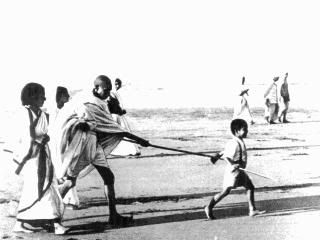
1. Gandhi being pulled by his grandson. National Gandhi Museum, Rajghat, New Delhi
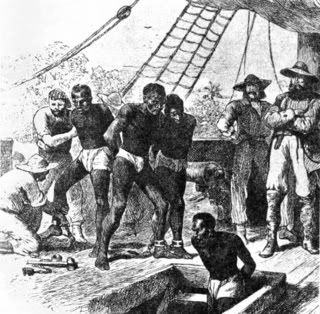
2. The Legend of Harishchandra. Wikipedia.org