The Legacy of Slave Revolutions
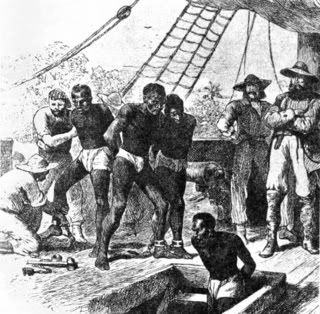
The legacy of American and European aggression towards our peoples lies in the four and a half centuries of the Transatlantic Slave Trade. They brutalized, raped, assaulted, enslaved, systematized and forcefully transported more then 11 million black men, women and children [1] as mere factors of production. As the “blood of the slaves”[2] soaked the fertile soils of the Americas, black men and women repeatedly resolved to fight back: “Mr. Convey seemed now to think he had me, and could do what he pleased; but at the moment—from whence came the spirit I don’t know—I resolved to fight; and, suiting my action to the resolution, I seized Convey hard by the throat; and as I did so, I rose.”[3] As Fredrick Douglas rose against his oppressor, b erein lies the legacy of the black man, woman and child's revolutions against those larcenous American and European institutions that enslaved them.

A comparative study on both the structure and the relative achievements of slave revolts in South Carolina and Haiti.
Comparatively, Haiti began its European settlement 171 years before South Carolina Columbus South Carolina
Additionally, even though the basic provisions were demanded for the slave according to Code Noir of 1685, “the plantation owner callously overworked his slaves, and to reduce overhead he frequently underfed them. An astonishingly high death rate testified to the brutality of the system.”[13] These awful conditions led to high mortality and low reproductive rates, which further created a need for constant replacement of slaves. Aside from awkward population ratios, there was a growing disparity amongst the free classes in the colony. In the later parts of the 18th century, there was also tension from the Afranchis populations, who were looking for political equity from/with their white counterparts.
"Are you doing yourselves justice when you lift your eyes towards Almighty God and call him Father, and then turn around, bow your heads before a man, and call him Master?”[14] This unnatural system of chattel slavery did not go unchallenged. Thus various forms of slave resistances could be found throughout both colonies, and it was stated that “Whenever and wherever slavery has existed there has been resistance to it, ranging from individual acts of defiance to well-organized, armed revolts.”[15] The most common structures of the slave resistances were found in both colonies and were centered on their ‘day-to-day’ activities. As such, there was the method of ‘slave vandalism,[16] where they destroyed property by mishandling the animals or by braking their tools and machinery.[17] They resisted by misplacing items, working carelessly in the fields and even by hiding rocks in the cotton they picked.[18] There was also a high percentage of theft, where slaves raided the master’s smokehouse, secretly slaughtered his stock, and killed his poultry. Slaves would often fake illnesses or injuries in order not to work.[19]
Slaves would often even trick their masters, as in the instance where the slave woman who was to be sold away from her family pretended to be blind.[20] In another documented case, “One master got the surprise of his life when his own slave sold him! This master took his very light-skinned blackman to the marketplace to be sold. Meanwhile he went to make arrangements for a hotel room. When the master returned he was bound in chains. While he was trying to prove that he wasn’t mulatto attempting to pass himself off as a white man, the real slave escaped.”[21] Slaves would often act as if they were “dumb” in front of the slave holders, who would then have the propensity to be less censored around the slave. Methods as such help eavesdropping and gathering information of the owner’s plans.[22] “They further even used songs, stories, and coded languages to confuse and bewilder their masters.”[23] These hidden rebellions also consisted of countless violent acts, as such as physical resistance, poisonings, stabbings, shootings, house and plantation burnings, and other acts of vengeance.[24]
Another prominent form of rebellion was to runaway. The slaves would often run away to various places for varying amounts of times. Some would try to make passage to freed black communities or maroon societies; others tried to take refuge with the indigenous; and a number of people tried to make their way up North to the non-slave states. Others would hide out for short periods of time; visiting other plantations or avoiding punishment but would ultimately return to the plantation.[25] Often abolitionists and freed blacks or whites would assist slaves to make their run for freedom, through means as such as the Underground Railroad. In two different cases, the slaves actually mailed themselves to freedom![26] One of the instances consisted of a man dubbed Henry “Box” Brown, mailed himself from the South to an abolitionist’s home in Philadelphia Florida
Although the two colonies seemed to have much in common, they stood in stark contrast when it came to violent uprisings. As such, the Stono Rebellion took place in South Carolina Low Country in 1739.[29] It was under the command of an Angolan slave, Cato, that twenty brave men and women tried fight their way to freedom. [30] They were screaming “Liberty St. Augustine South Carolina
Although most slaves’ revolts were quickly dispersed, the slaves in San Domingo found greater success, “whose revolution against France … had led to the first nation run by blacks in the New World .”[35] Although they both arose in a time of political upheaval, the Haitian Revolution held a stark contrast to the Stono rebellion. There was an abnormal 10 to 1 ratio of slaves to freeman in Haiti , and their colony consisted of only one third the land of South Carolina Americas South Carolina
Although the Haitians were able to initially fight off the slave holding colonizers, a century of civil war and civil unrest amongst the various class factions led the island nation to fall back into imperial rule. Although the United States America West Indies , and made sure they suppressed the tiny nation at every given chance. Further, South Carolina reverted to a similar system of racism after the Emancipation Proclamation; from denying their black’s their essential civil rights, to even terrorizing them out of the region. Thus one can say that not only were the slave revolts ultimately not successful in the long run, but also widen the doors to other forms of oppression thereafter.
The Haitian and South Carolinian slaves were merely fighting their immediate circumstances, and both found the same fate through the coming centuries. Neither were ever paid reparations, neither were even given the respect as those who built the Americas
FOOD FOR THOUGHT:
Through expansionism, colonialism and merchant capitalism there rose a middle class (versus simply the rich and the poor), who in turn (the middle class) used their increasing capital to fund an industrial revolution . The rise of these new industries across Europe, especially in Britain , needed new markets and changed their existing equilibrium of the import based markets to new export ones. Consequently they no longer needing their existing relationships with the colonies. Therefore one can say slavery was never truly emancipated; there was just a shift in their status quo, as the old institution of colonialism shifted to the new political economy of the ‘New Imperialism.’
Read more at:
Bibliography
Douglas, Frederick New York
Putnam. 1997
Garnet, Henry Highland San Diego
McKissack, Patricia. Rebels Against Slavery. New York
Cohen, Samuel. 50 Essays. New York
Pearson, Edward. ‘A Countryside Full of Flames.’ Heuman, Gad. The Slavery Reader. New
Zinn, Howard. A People’s History of the United States New York
Davidson. Gienapp. Nation of Nations. New York
Stewert, Jeffrey. 1001 Things Everyone Should Know about African American History. New
C.L.R. James, “The San Domingo Masses Begin,” from Caribbean Slavery in the Atlantic
World. Found in Professor Petty’s Course Catalogue.
[1] Thomas, Hugh. The Slave Trade. Simmon and Schuster, 1997. http://africanhistory.about.com/library/weekly/aa080601a.htm
[2] Nas. Stillmatic. Columbia
[3] Douglas , 79-80
[4] Haiti
[5] ibid
[6] Davidson, 55
[8] Stewart, 1996
[9] Haiti
[10] Haiti
[11] Ibid
[12] Ibid
[13] Burns, 2002
[14] Gibran, Kahlil. The Prophet. 1923.
[15] McKissack, 1
[16] Stewert, 28
[17] Ibid
[18] Ibid
[19] Davidson, 357
[20] McKissack, 19
[21] Ibid
[22] Ibid
[23] Ibid
[24] Stewart, 33
[25] Concept gathered from discussions surrounding Stuart Schwartz “Resistance and Accommodation in the 18th Century Brazil
[26] Stewart, 33
[27] Stewart, 37
[28] Stewart, 35
[29] Pearson, 569
[30] McKissack, 22
[31]PBS: The Stono Rebellion 1739. http://www.exampleessays.com/viewpaper/99406.html
[32] McKissack, 22
[33] Pearson, 569
[34] PBS: The Stono Rebellion 1739. http://www.exampleessays.com/viewpaper/99406.html
[35] Zinn, 303
[36] Haiti
[37] C.L.R. James. “The San Domingo Masses Begin.” Caribbean Slavery in the Atlantic World.
[38] Haiti
[39] Pearson, 569


11 comments:
At the eve of the crowning of the first Afrikan American President of the United States of America, I have come across your article that is very insightful. I hope a lot of our people would read, seek knoweldeg about our collective history and use it fruitfully to emancipate and redeem ourselves to human equality - break the remaining shackles of inequality for the good of human kind. God bless you for your piece of research. Koku
I have been visiting various blogs for my term papers writing research. I have found your blog to be quite useful. Keep updating your blog with valuable information... Regards
top [url=http://www.xgambling.org/]casino[/url] check the latest [url=http://www.casinolasvegass.com/]free casino bonus[/url] free no set aside perk at the chief [url=http://www.baywatchcasino.com/]casino online
[/url].
Wonderful article! This is the kind of information that should be
shared across the net. Shame on Google for no longer positioning this put up upper!
Come on over and seek advice from my site . Thanks =)
Here is my web-site :: workouts to improve vertical
Mylwyb [url=http://hermeskelly.finniwolf.com][b]hermes birkin handbags[/b][/url] designer hermes http://hermeskelly.finniwolf.com Htrskj Balukm hermes handbag
What i do not understood is if truth be told how you are now not
actually much more neatly-preferred than you may be right now.
You are so intelligent. You realize therefore
significantly on the subject of this subject, produced me for
my part consider it from numerous various angles.
Its like men and women are not involved unless it's something to do with Girl gaga! Your personal stuffs great. All the time take care of it up!
Feel free to visit my page; http://www.virtualworldsedu.info/houseofusher/LucindabbBabbnf
Wow, superb weblog format! How lengthy have you been blogging for?
you made running a blog look easy. The whole look
of your web site is wonderful, as neatly as the content!
my web-site jobvargas.com
Fantastic goods from you, man. I have understand your stuff previous to and you're just too fantastic. I actually like what you have acquired here, certainly like what you are stating and the way in which you say it. You make it entertaining and you still care for to keep it smart. I can not wait to read far more from you. This is really a tremendous web site.
Look at my web-site ... Http://www.rejestic.com/groups/several-suggestions-that-can-improve-your-vertical-jump/
air max, sac longchamp, ray ban sunglasses, longchamp pas cher, ugg boots, ray ban sunglasses, nike free, oakley sunglasses, nike free, chanel handbags, cheap oakley sunglasses, nike outlet, louboutin, longchamp, nike roshe run, air jordan pas cher, tiffany jewelry, longchamp outlet, longchamp outlet, michael kors, prada outlet, louis vuitton outlet, louboutin outlet, louis vuitton, uggs on sale, ugg boots, louis vuitton, polo ralph lauren outlet, oakley sunglasses, louis vuitton, kate spade outlet, louboutin pas cher, polo ralph lauren outlet, tory burch outlet, tiffany and co, oakley sunglasses, ray ban sunglasses, ralph lauren pas cher, christian louboutin outlet, nike air max, nike air max, louboutin shoes, replica watches, jordan shoes, oakley sunglasses, gucci outlet, prada handbags, burberry, replica watches, louis vuitton outlet
wedding dresses, giuseppe zanotti, instyler, mont blanc, converse outlet, longchamp, babyliss, north face outlet, north face outlet, insanity workout, gucci, vans, hollister, asics running shoes, chi flat iron, ralph lauren, baseball bats, bottega veneta, timberland boots, mac cosmetics, valentino shoes, abercrombie and fitch, mcm handbags, hollister, lululemon, nike air max, hollister, celine handbags, herve leger, ghd, louboutin, soccer jerseys, p90x workout, beats by dre, vans shoes, ray ban, nike air max, nike trainers, new balance, ferragamo shoes, nike huarache, reebok shoes, lancel, nfl jerseys, nike roshe, oakley, iphone cases, jimmy choo shoes, birkin bag, soccer shoes
bottes ugg, ugg pas cher, louis vuitton, pandora jewelry, moncler, moncler, doudoune canada goose, replica watches, louis vuitton, moncler, juicy couture outlet, moncler, juicy couture outlet, ugg,uggs,uggs canada, canada goose, ugg,ugg australia,ugg italia, pandora charms, canada goose, links of london, canada goose outlet, pandora charms, canada goose uk, canada goose, marc jacobs, moncler, wedding dresses, louis vuitton, canada goose outlet, karen millen, louis vuitton, moncler outlet, sac louis vuitton pas cher, coach outlet, moncler, swarovski, ugg boots uk, toms shoes, moncler, pandora jewelry, canada goose, montre pas cher, thomas sabo, supra shoes, hollister, swarovski crystal
Post a Comment